
Home » Blog » Truck Compliance » What Does DOT Compliance Mean?
What is DOT Compliance in 2026? Complete FMCSA Guide for Trucking Companies
Last updated: April 2026
DOT compliance is one of the most critical aspects of running a successful and legal trucking operation in the United States. Failure to comply can result in hefty fines, out-of-service orders, or even loss of operating authority.
This 2026 guide explains what DOT compliance really means, key requirements, differences with FMCSA compliance, practical steps to stay compliant, current fines, and important updates including the Motus registration system.
What Does DOT Compliance Mean?
DOT compliance means fully adhering to all safety, operational, and administrative regulations set by the U.S. Department of Transportation (DOT) and enforced primarily by its agency — the Federal Motor Carrier Safety Administration (FMCSA).
In practice, when carriers say “DOT compliant,” they usually refer to meeting FMCSA safety standards for commercial motor vehicles (CMVs) operating in interstate commerce.
The goal is simple: protect drivers, other road users, and the public by ensuring vehicles are safe, drivers are qualified, and operations follow strict rules.
DOT vs FMCSA Compliance – Quick Clarification
- DOT — The overarching federal department responsible for all transportation.
- FMCSA — The specific agency under DOT that writes and enforces most trucking rules.
DOT compliance = following FMCSA regulations in most cases for motor carriers.
Key Requirements for DOT Compliance in 2026
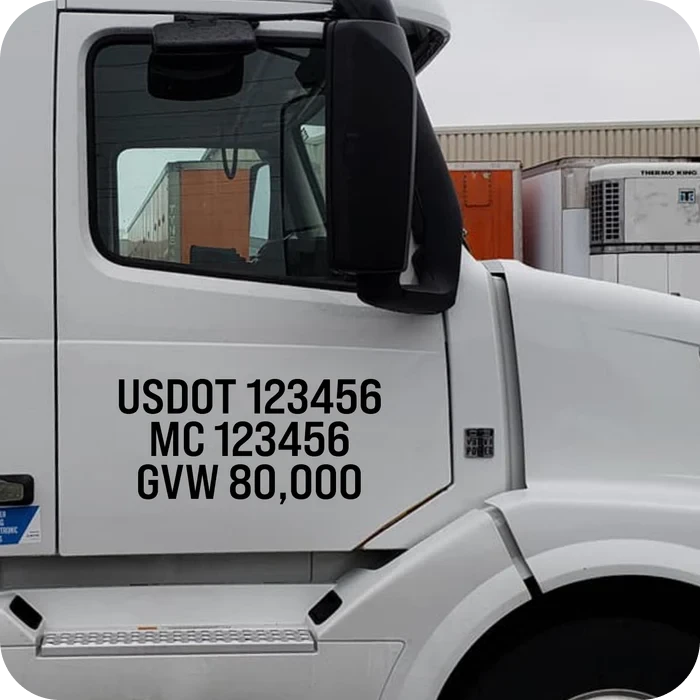
USDOT Number:
Most companies that run commercial motor vehicles across state lines need this unique ID.
USDOT Number Registration
Every commercial vehicle operator needs a unique USDOT Number. In 2026, this is the primary federal identifier (MC numbers have been phased out as separate entities).
Operating Authority
Required for interstate for-hire operations. Now tied directly to your USDOT Number with authority suffixes.
Driver Qualification (DQ) Files
Must maintain a complete file for every driver including: application, medical certificate, background checks, road test, license verification, and training records
Hours of Service (HOS) & ELD Compliance
Strict rules to prevent driver fatigue. Electronic Logging Devices (ELDs) are mandatory for most carriers.
Drug and Alcohol Testing Program
Pre-employment, random, reasonable suspicion, post-accident, return-to-duty, and follow-up testing through a consortium.
Vehicle Maintenance and Inspections
Regular preventive maintenance, annual inspections, and detailed repair records.
Hazardous Materials (Hazmat) Handling
Additional training, permits, and security plans if you haul hazmat.
Recordkeeping
All documents must be kept for the required period and readily available during audits or roadside inspections.
CSA (Compliance, Safety, Accountability) Scores
FMCSA monitors your safety performance through roadside inspections, crashes, and violations.
Step-by-Step: How to Achieve and Maintain DOT Compliance
- Register your business and obtain a USDOT Number via the FMCSA Portal / Motus system.
- Apply for proper operating authority if needed.
- Develop a comprehensive safety management plan.
- Set up driver qualification files and ongoing training.
- Implement an ELD system and HOS policy.
- Enroll in a drug & alcohol testing consortium.
- Create a vehicle maintenance program with detailed logs.
- Keep all records organized and accessible.
- Conduct regular internal audits and staff training.
- Monitor your CSA scores and address violations quickly.
Pro Tip for 2026: With the full rollout of the Motus system, keep your FMCSA account information accurate and up-to-date — this will become the central hub for all registrations and filings.
DOT Fines and Penalties for Non-Compliance
Penalties can be severe:
- Minor violations: hundreds to thousands of dollars
- Serious violations (e.g., falsified logs, no ELD): $10,000+
- Out-of-service violations or operating without authority: tens of thousands + possible suspension
- Repeated issues can lead to “Unfit” rating and shutdown of operations
FMCSA uses a points-based system through CSA to prioritize enforcement.
Common Challenges in 2026
- Keeping up with Motus transition and new registration rules
- Managing electronic records and cybersecurity requirements
- Higher insurance costs for carriers with poor compliance history
- Driver shortage combined with strict qualification rules
Carrier Safety:
Making sure carriers have good safety management systems
Commercial Driver's Licenses (CDLs):
Setting up and enforcing standards for driver qualifications
Vehicle Safety:
Creating rules for vehicle checks, upkeep, and fixes
FAQ – Frequently Asked Questions
1. Is DOT compliance the same as FMCSA compliance? They overlap heavily. FMCSA enforces most day-to-day trucking rules under the DOT umbrella.
2. Do I need a USDOT Number even for intrastate operations? Often yes — many states require it, and it’s mandatory if you cross state lines or haul hazmat.
3. What changed in 2025–2026 regarding DOT compliance? MC numbers were phased out. The USDOT Number became the single identifier. Motus system is replacing older registration platforms.
4. How often do I need to update driver qualification files? Medical certificates must be updated every 24 months (or more frequently for certain conditions). Other documents have specific retention periods.
5. Can small carriers (owner-operators) ignore some rules? No. Almost all rules apply once you operate a CMV over 10,001 lbs GVWR in interstate commerce.
EasyWayPro: Your Partner in DOT Compliance
EasyWayPro knows how hard it is to handle DOT compliance
DOT compliance is not just about avoiding fines — it’s about building a safe, professional, and scalable trucking business. In 2026, with stricter enforcement and digital systems like Motus, proactive compliance gives you a real competitive advantage.
Many carriers partner with experienced compliance specialists or use modern TMS software to automate recordkeeping, alerts, and reporting.
If you need help setting up your compliance program, managing DQ files, ELD integration, or navigating the Motus transition, feel free to reach out to our team.